Showing posts with label Imbolc. Show all posts

Friday, February 2, 2018

Crossing the Threshold - Towards the Light

© 2018 Oona McOuat  


Can you feel it - the days growing markedly longer as we  move from the dark towards the light? It is time to stretch and waken and to prepare to plant our winter dream seeds. It is a time for hope. 
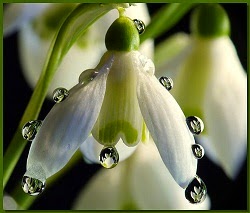


Photo by Licht


This season belongs to Brigid. Long ago in the Celtic lands, the coming of Brigid was celebrated in early February with heartfelt prayers, songs and stories. Today, as we hunger for meaning, context, and connection, words that flow forth from the natural cycle of things can help build a home and hearth within our hearts. So close your eyes and sink into a place beyond place, and perhaps you will hear me telling you this Imbolc tale with my harp...


Photo by Kmax


There’s no denying it. When Cailleach Bheur woke up, she was a crotchety old crone. Maybe she was tired of people complaining about her. Maybe she’d heard enough gossip about the way she looked - they said she was old and ugly with a blue face and only one eye. True, she wasn’t getting any younger and she leaned more heavily on her holly staff than she had when she was born - already an old woman! - at Hallowe’en. Sure, she had stirred up a couple of good storms – one had even caused the roof to blow off McTavishes’ cow barn. But hadn’t these people anything better to do than sit around and grumble about the weather? They blamed her for the long, cold nights, for their barren fields and emptying larders. She was just doing her job.


Cailleach Bheur
by Andrew L. Paciorek

Cailleach sighed. Maybe she needed a change of vocation. Or a vacation? But who then, would keep the land in winter’s grasp? Cailleach stretched her aching limbs, put on her tattered cloak of decaying leaves and left the cave where she’d been sleeping curled up beside a wolf. As she walked, she tapped the earth with her gnarled staff. Everywhere she tapped, the ground froze and the grass turned to ice.


Photo by Licht

Cailleach stopped to catch her breath. She was getting weaker. To test her powers, she raised her staff and called forth a bitter, howling wind. In December, this would have been easy. But now, in early February, it nearly sapped her strength.

Braced against the strong wind, Cailleach slowly walked across the moor towards the water’s edge. With a sigh, she eased herself down upon a cold grey boulder, her ragged cloak and long white hair streaming behind her.

“Cailleach Bheur” she heard on the voice of the wind, “Cailleach Bheur, it is time!”

Then as suddenly as the wind she'd summoned had started, it stopped, and the grumpiness that had been with Cailleach since early morning was gone too. Squinting her tired eyes, she looked out upon the horizon and saw a weathered blue boat heading towards the shore. When it landed, Cailleach carefully eased herself up and waded through the shallows to climb aboard.


Wee Blue Boat - Photo by ian Cameron


As the sun set and all through the night the boat moved purposefully to the west, as if propelled by an invisible sail, its course steady and assured.  Just before morning, the vessel reached an island covered in groves of oak and holly. Slowly, the old one got out of the boat. Her joints creaked and groaned as she walked, even more gingerly than the day before, to the Well that sat at the center of the island. As the first light of dawn awoke the sky, Cailleach picked up a ladle, worn smooth by touch and time, that lay on the ground and dipped it into the Well.


Brigid's Well, Faughert, Ireland


“It is time,” she muttered, bringing the water to her lips, delighting in its sweetness as it ran down her throat. As she swallowed, her body grew light and lithe, her skin smooth, her hair glossy and her holly staff transformed into a white birch wand. Leaning over the Well, she looked at her reflection. She was no longer Cailleach Bheur, the Old Wife of Winter. She was Brigid, the Spirit of Spring.


Brigid sprang to her feet, spinning and smiling and admiring her new gown - white with bits of green and yellow trim around the sleeves. Joyfully, she scampered back to the boat and sailed back to shore. When she landed, everywhere she skipped and danced the land turned gently green beneath her feet. Everything she touched with her birch wand stirred with new life. Slowly, the sap in the trees started to move. The birds in the south grew restless and felt the first pull to head north. Her breath was a warm wind that brought the people hope.


Windflower by John Waterhouse - 1903


When Brigid arrived at the village no one recognized her. They praised her youth and beauty and welcomed her in their midst. That day, she sat amongst them on the greening hills and they watched in awe and wonder as she wove the most beautiful cloth they’d ever seen, stitching into it healing threads which would keep their powers for as long as she was remembered.


And so, in the lands where the people remember still, on midwinter’s eve, Imbolc, the eve of the birth of Brigid, they place a piece of linen or other cloth outside or on the window sill. It is said that on this night, Brigid travels all over the land and if she sees this cloth she will bless it and give it healing powers with this special prayer:

              Let the cloth of life be mended.
              Let the thread be linked again,
              restored, cleansed - the forests growing,
              native plants in field and fen.
              Let the cloth of life, in beauty,
              be restored by will to be.
              People with the plants and creatures,
              tending earth and sky and sea.


Brigid with Snowdrop Faeries
by Wendy Andrew


And that is the story of the Birth of Brigid

With Blessings,
Oona


Saturday, January 30, 2010

The Birth of Brigid

 © 2010 Oona McOuat  


Winter still sits heavily on us during the month of February. We bundle ourselves against the cold, light candles against the dark. And yet the pulse of nature quickens.

If we live on the land, we greet the first new life of the year. Snowdrops and nettle shoots sing the sweet promise of spring.


Photo by Licht


Sheep give birth to their lambs. One of the old names for the midpoint between winter solstice and spring equinox is Oimelc, or "ewe's milk." It is also known as Imbolc, which means "in the belly."


This season belongs to Brigid. Long ago in the Celtic lands, the coming of Brigid was celebrated in early February with heartfelt prayers and songs and stories. Today, as we hunger for meaning, context, hope and connection, stories that flow forth from the natural cycle of things can help build a home and hearth within our hearts. So close your eyes and sink into a place beyond place and perhaps you will hear me telling you this Imbolc tale with my harp...


Photo by Kmax


There’s no denying it. When Cailleach Bheur woke up, she was a crotchety old crone. Maybe she was tired of people complaining about her. Maybe she’d heard enough gossip about the way she looked - they said she was old and ugly with a blue face and only one eye. True, she wasn’t getting any younger and she leaned more heavily on her holly staff than she had when she was born - already an old woman! - at Hallowe’en. Sure, she had stirred up a couple of good storms – one had even caused the roof to blow off McTavishes’ cow barn. But hadn’t these people anything better to do than sit around and grumble about the weather? They blamed her for the long, cold nights, for their barren fields and emptying larders. She was just doing her job.


Cailleach Bheur
by Andrew L. Paciorek

Cailleach sighed. Maybe she needed a change of vocation. Or a vacation? But who then, would keep the land in winter’s grasp? Cailleach stretched her aching limbs, put on her tattered cloak of decaying leaves and left the cave where she’d been sleeping curled up beside a wolf. As she walked, she tapped the earth with her gnarled staff. Everywhere she tapped, the ground froze and the grass turned to ice.


Photo by Licht

Cailleach stopped to catch her breath. She was getting weaker. To test her powers, she raised her staff and called forth a bitter, howling wind. In December, this would have been easy. But now, in early February, it nearly sapped her strength.

Braced against the strong wind, Cailleach slowly walked across the moor towards the water’s edge. With a sigh, she eased herself down upon a cold grey boulder, her ragged cloak and long white hair streaming behind her.

“Cailleach Bheur” she heard on the voice of the wind, “Cailleach Bheur, it is time!”

Then as suddenly as the wind she'd summoned had started, it stopped, and the grumpiness that had been with Cailleach since early morning was gone too. Squinting her tired eyes, she looked out upon the horizon and saw a weathered blue boat heading towards the shore. When it landed, Cailleach carefully eased herself up and waded through the shallows to climb aboard.


Wee Blue Boat - Photo by ian Cameron


As the sun set and all through the night the boat moved purposefully to the west, as if propelled by an invisible sail, its course steady and assured.  Just before morning, the vessel reached an island covered in groves of oak and holly. Slowly, the old one got out of the boat. Her joints creaked and groaned as she walked, even more gingerly than the day before, to the Well that sat at the center of the island. As the first light of dawn awoke the sky, Cailleach picked up a ladle, worn smooth by touch and time, that lay on the ground and dipped it into the Well.


Brigid's Well, Faughert, Ireland


“It is time,” she muttered, bringing the water to her lips, delighting in its sweetness as it ran down her throat. As she swallowed, her body grew light and lithe, her skin smooth, her hair glossy and her holly staff transformed into a white birch wand. Leaning over the Well, she looked at her reflection. She was no longer Cailleach Bheur, the Old Wife of Winter. She was Brigid, the Spirit of Spring.


Brigid sprang to her feet, spinning and smiling and admiring her new gown - white with bits of green and yellow trim around the sleeves. Joyfully, she scampered back to the boat and sailed back to shore. When she landed, everywhere she skipped and danced the land turned gently green beneath her feet. Everything she touched with her birch wand stirred with new life. Slowly, the sap in the trees started to move. The birds in the south grew restless and felt the first pull to head north. Her breath was a warm wind that brought the people hope.


Windflower by John Waterhouse - 1903


When Brigid arrived at the village no one recognized her. They praised her youth and beauty and welcomed her in their midst. That day, she sat amongst them on the greening hills and they watched in awe and wonder as she wove the most beautiful cloth they’d ever seen, stitching into it healing threads which would keep their powers for as long as she was remembered.


And so, in the lands where the people remember still, on midwinter’s eve, Imbolc, the eve of the birth of Brigid, they place a piece of linen or other cloth outside or on the window sill. It is said that on this night, Brigid travels all over the land and if she sees this cloth she will bless it and give it healing powers with this special prayer:

              Let the cloth of life be mended.
              Let the thread be linked again,
              restored, cleansed - the forests growing,
              native plants in field and fen.
              Let the cloth of life, in beauty,
              be restored by will to be.
              People with the plants and creatures,
              tending earth and sky and sea.


Brigid with Snowdrop Faeries
by Wendy Andrew


And that is the story of the Birth of Brigid

With Blessings,
Oona


Wednesday, February 25, 2009

A Midwinternight's Dream


© 2009 Oona McOuat

The night sky is the colour of a concord grape. Glistening from its depths are a zillion pinpricks of light. Constellations so often unseen here in the cloudy Pacific Northwest flank a smiling crescent moon. As I drink in the peace of this midwinter's night, I am filled with awe at its majesty and promise. There is so much beauty and potential stretching out before me, so much mystery; so much that remains unknown.

Photo
by Leigh Hilbert


Many of us are now sensing we are at a personal and global turning point. Change can trigger fear. Every news story seems to speak of the "worldwide economic recession we now face". As I made my way down the mountain at dusk today I reflected on this. Yes, lots of us have been taking way too much for too long from a planet that has been receiving too little in return for her giving. "Feeling the pinch" and being forced to reprioritize our consumption, values and lifestyles here in the west may very well be for the best. But being terrified that our lives as we know them may collapse, and falling into survival mode as a result will not help us make sustainable choices.


Photo by Leigh Hilbert

We tend to quantify our relationships with work and objects and even people - calculating them in dollars, hours and amounts of energy and attention spent - rather than valuing the qualitative - the essence and presence that infuses what we do and create with love, I ponder, as I trek past the newly returned songbirds singing to the setting sun. Once again I am reminded that the worth of life's greatest treasures cannot be measured.

Photo by Leigh Hilbert

Does the economic system support us, or do we, through our beliefs, intentions and actions, support it, I wonder as I stop to tie my boot lace. In other words, am I really sustained by the material world - thus subject to possible scarcity and loss if the market wills it so, or do I somehow interact symbiotically with the world around me, creating abundance or deficit depending upon the energy balance between us?

I think about the founders of Findhorn, about their ability to grow huge cabbages in poor and sandy soil because elements of the invisible realm, the devas and the faeries, were awakened and the impossible became possible. The flourishing of that first garden at Findhorn was not the result of the mythic magic of Jack in the Beanstalk. It was rooted in faith in the unseen and planted with sweat inducing, tangible physical labour.


Photo by shaneandruth

I think back to last night's sky and how it held in its vastness a knowing that so much is waiting to be embraced and discovered, remembered and reclaimed now. Each of those shining stars a tiny seed that might grow into a gigantic and amazing fruit if I have the gumption or vision to plant it.

Here in southwestern Canada it will soon be the time to plant as we cross the halfway point between winter solstice and the spring equinox. Snowdrops, dandelions and crocuses are pushing forth towards the sun's lengthening rays. In a few weeks the first lambs will be born and in the still of the night I will hear their bleating.


Photo by law-keven

This came from my friend Krista of Generacion in Portland, Oregon: "The Mayan glyph for birth means to touch the earth, and in traditional Celtic times, newborns were taken at high noon to touch their brow to the earth." As we prepare for the season of birth and rebirth, it is a wonderful time to touch the earth and to ponder on how our lives are connected to the world around us.

The nights are growing shorter now but they are still the nights of winter's dreamtime, nights of warm nest beds and bedtime stories. As I hiked up the mountain today - the hills in the distance today still covered in snow - a simple story came to me. I will share it with you here.


Photo by Leigh Hilbert


It is time for a little midwinter night's dreaming…


Once a year at precisely midwinter a strange magnetic force field encompasses the earth and causes all phone lines, satellites, electric, nuclear and geothermal power stations and generators, weapons and widgets, batteries, electronic devices and anything that runs on fossil fuels to stop working. (For some odd reason essential life support systems are mercifully spared. This phenomenon is of course experienced at midsummer in the southern hemisphere.)

Photo by Leigh Hilbert

For twenty four still and momentous hours games boys, televisions, radios, SUVs, fighter jets, machine guns, computers, DVD, CD and MP3 players, watches, cell phones and land lines, Blackberries, and ipods are cast aside and people walk to the Gathering Places carrying acoustic instruments, blankets, rugs, a bowl and a spoon, and a yam or an onion (or a gigantic cabbage) for the communal soup pot. When they arrive at the Gathering Place, large cauldrons of broth are simmering over the fire. "Stone soup" it is fondly referred to, as everything that goes into that pot comes out twice as good, and there is always enough for everyone to eat their fill.


Photo by Sfphotocraft

The air is laced with the aroma of bread baking in the wood-fired ovens as families and neighbors, friends and strangers begin to mingle. For the first few years talk focused on how odd it was to be sitting outdoors by a fire in the middle of winter in a silence so vast it was almost unfathomable - no traffic, no buzz and hum of power lines, no idea of what the precise time was even….

"Just think," said one teenager, "This is how our ancestors
lived all year round!"

Now, although the silence is appreciated - and there are designated intervals when all talk stops and everyone stares at the stars or into the fire and can feel the rhythm of their own beating heart - this night has become a time for music and storytelling. 


Photo by SLENGfJES

At first the stories were anecdotal:

"This reminds me of lying on the hood of a car beside someone I loved on a warm summer's night in a green mountain valley gazing at the moon…."

"The greatest peace I've ever felt was swimming flank to flank with a joy-gushing dolphin…. I felt time stop then too…"


Photo by Leigh Hilbert

Now, it is a night for speaking of the winter's journey - what has been lost, what has been found, what is being put to rest and what seeds are being gathered to be sown in the spring. It is understood that endless activity and consumption lead to endless restlessness and hunger. This midwinter accounting, this breaking the cycle of overdoing, this weaning from an addiction to busyness and technology begins to address an insidious yet overwhelming sense that there is always one more thing to accomplish, one more thing to buy or achieve in order for us to be happy.Sometimes, even when the technological world is "back on," people choose to go to the Gathering Place, to build a fire and make soup, to take off their shoes and feel the grass between their toes, to touch and to talk. To remember what is real.


Photo by Kmax

Blessed
Midwinter dreams to you,

Oona